

Use Case
Indoor Air Quality Monitoring
See the air quality problem before people start feeling it.
Continuous tracking of CO₂, particulate matter, VOCs, temperature and humidity across your facility — turning indoor air quality from an occasional spot-check into a live, alertable metric.
The problem
Poor air quality is usually invisible until someone complains
CO₂ buildup, particulate matter and VOCs typically aren't monitored continuously, so degrading air quality is only noticed when occupants report discomfort or fatigue — or during an occasional compliance check.
Without continuous data, it's hard to tell whether a stuffy room is a one-off or a pattern, and harder still to show air quality was within range at any given time.
Issue → solution
What air quality monitoring actually fixes
The issue
Poor air quality is invisible until someone complains.
Hover to see the fix →
XiGiFy solution
CO₂, PM2.5, VOCs, temperature and humidity are tracked continuously, not spot-checked.
The issue
A single bad reading doesn't tell you if it's a one-off or a pattern.
Hover to see the fix →
XiGiFy solution
Trend-based alerting flags degrading conditions before they become noticeable.
The issue
Compliance checks usually rely on occasional manual spot-checks.
Hover to see the fix →
XiGiFy solution
Continuous, logged readings give you a standing record for air-quality reviews.
The issue
Air quality data sits separate from the systems that could act on it.
Hover to see the fix →
XiGiFy solution
Integrates with ventilation controls and Smart BMS so a bad reading can trigger an automated response.
The issue
Occupant comfort and wellbeing are hard to evidence without numbers.
Hover to see the fix →
XiGiFy solution
Logged air-quality data feeds sustainability and occupant-wellbeing reporting.
The issue
Different spaces carry different air-quality risks.
Hover to see the fix →
XiGiFy solution
Sensors are placed across the zones that matter most, so each area is measured on its own conditions.
How it works
From sensor reading to a documented response
- Step 01
Sense
Multi-parameter sensors continuously measure CO₂, PM2.5, VOCs, temperature and humidity across monitored zones.
- CO₂, PM2.5, TVOC and CO measured continuously
- Temperature, humidity and dew point alongside
- In-room or in-duct sensors at zone level
- Step 02
Analyze
The platform tracks trends and flags threshold violations rather than waiting for a single bad reading.
- Trend-based, so a slow decline is caught early
- Each space judged against its own conditions
- Not dependent on a single bad reading
- Step 03
XiGiFy Brain
Alert
Facility teams are notified when conditions start to degrade, so a response can be triggered before it becomes noticeable.
- Facility teams notified as conditions start to degrade
- Readings can drive ventilation through HVAC and BMS integration
- Response starts before occupants notice
- Step 04
Log
Readings and alerts are logged, giving you a record to support compliance checks and occupant-comfort reporting.
- Time-stamped, continuous records
- Evidence for WELL, LEED and RESET documentation
- Occupant-wellbeing data for ESG reporting
Capabilities
What's included
Multi-parameter sensing
CO₂, PM2.5, VOCs (TVOC), CO, temperature, humidity and dew point tracked continuously — a wider field of view than a single-metric spot-check, because air quality is not one number.
Trend & threshold alerting
Flags degrading conditions early based on trend data rather than a single reading, so a response can be triggered before occupants notice.
HVAC & BMS integration
Connects with ventilation controls and Smart BMS (BACnet, Modbus, MQTT) so an air-quality reading can drive an automated response, not just an alert.
In-room and in-duct deployment
Sensors placed at the zone level — in the room or in the duct — rather than building-wide averages, so each space is measured against its own conditions.
Green building certification support
Continuous, logged air-quality records support WELL, LEED and RESET documentation requirements — turning monitored data into the evidence these programmes need.
Compliance-ready logging
Time-stamped, continuous records support internal air-quality reporting, occupant-health documentation and compliance reviews.
ESG reporting support
Occupant-health and wellbeing data feeds into the social side of ESG reporting alongside energy and water figures.
Use cases
Where this fits
- Commercial office buildings and facilities targeting WELL or LEED certification
- Healthcare facilities and hospitals
- Educational institutions
- Hospitality — hotels, malls and public spaces
- Data centres and critical environments monitoring corrosive gas indicators
Deployment
Integrations & rollout
Integrates with HVAC/ventilation controls and Smart BMS so air-quality readings can trigger an automated response, not just an alert.
Sensors are placed across the zones that matter most; the platform tracks readings continuously and applies trend-based alerting.
Deployed
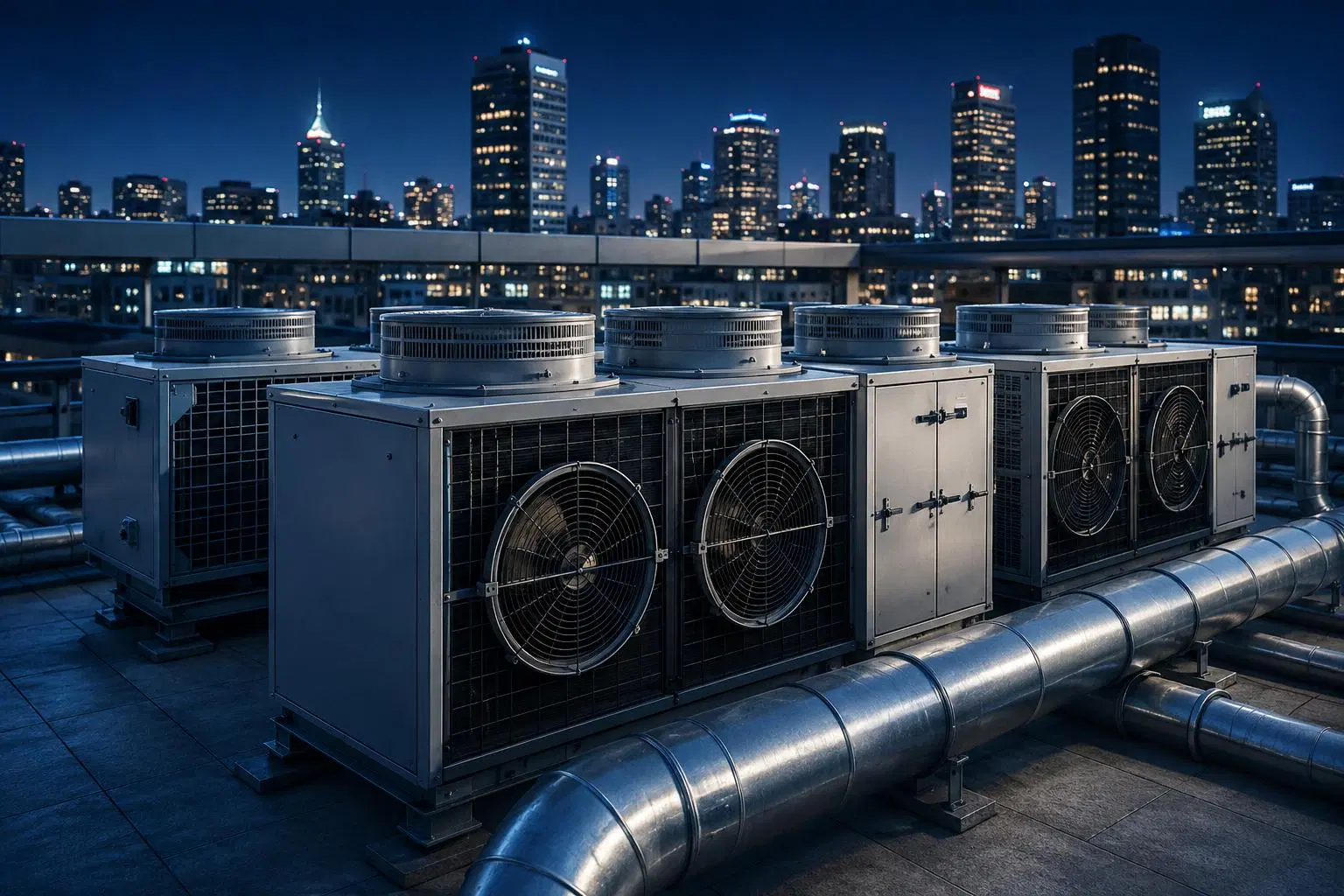
Indoor Air Quality Monitoring in the field
Relevant industries
Where this use case is commonly applied
FAQ
Questions about indoor air quality monitoring
See indoor air quality monitoring on your own sites.
Tell us what you want to monitor and we'll walk you through how it would work for your facilities.