
Use Case
Data Center Monitoring
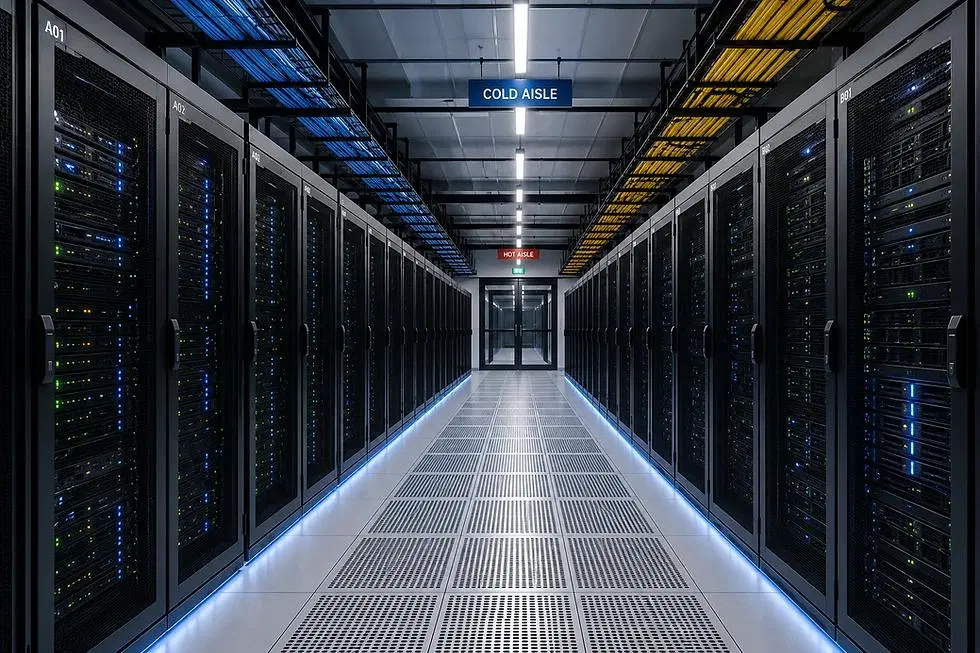
In a data center, an environmental problem is an outage. Catch it before it is one.
Your server stack has monitoring. The environmental conditions that take it down — cooling running out of spec, backup power that's never been proven under real load, a drip finding its way toward a rack — usually don't. XiGiFy instruments the layer underneath the compute: temperature and humidity by zone, generator and UPS continuity, leak risk near critical infrastructure, live power draw and energy trends. By the time a server logs an alert, the environmental cause started hours or days earlier.
The problem
The server environment is monitored — the cooling, power and water conditions that take servers down.
A facility can have excellent server and network monitoring and still be blind to the environmental conditions underneath it — cooling performance, power path health, water risk near racks — until a threshold is already breached and equipment is already at risk.
Backup power is the clearest example: a generator or UPS is often only proven to work the moment it's needed, because testing it continuously isn't practical without instrumentation. The same is true of a slow leak near a raised floor or a cooling unit quietly losing efficiency — none of it shows up until something fails.
Issue → solution
What data centers actually fixes
The issue
Cooling drifts out of range gradually, and is usually only noticed once equipment is already stressed.
Hover to see the fix →
XiGiFy solution
Temperature and humidity are tracked continuously by zone, so a developing drift is visible before it becomes a thermal event.
The issue
Backup power is only proven when it's actually needed — which is the worst time to find out it doesn't work.
Hover to see the fix →
XiGiFy solution
Generator and backup power conditions are monitored continuously, the same approach already used in XiGiFy's diesel generator monitoring.
The issue
A water leak near a raised floor or rack is expensive precisely because it's found late.
Hover to see the fix →
XiGiFy solution
Leak sensing catches water where it shouldn't be while it's still a drip, using the same detection XiGiFy runs in industrial and commercial deployments.
The issue
Power and energy consumption are usually reconciled from utility bills, not tracked live.
Hover to see the fix →
XiGiFy solution
Smart metering gives a continuous, site-level power and energy picture instead of a monthly reconstruction.
The issue
Critical equipment failures look sudden, but usually have an earlier signature.
Hover to see the fix →
XiGiFy solution
Asset monitoring watches for the early signs of developing equipment faults, not just the failure itself.
How it works
The environmental layer underneath the server stack
- Step 01
Instrument
Sensors cover temperature, humidity, power and backup-power paths, and leak-prone zones — the conditions that cause outages, not the compute itself.
- Temperature and humidity by row, room and zone
- Generator and UPS voltage, load, transfer status and battery health
- Leak sensing around raised floors, cooling lines and racks
- Step 02
Watch
Conditions are tracked continuously against target thresholds for each zone and system, rather than spot-checked.
- A hot aisle creeping out of spec is visible as it develops
- Circuit-level power draw, PUE trends and load imbalances
- Air handlers, cooling units and UPS watched for early fault signatures
- Step 03
XiGiFy Brain
Alert
A developing issue — a drifting cooling zone, an untested backup path, a leak signal — reaches the right person immediately.
- Cooling drift flagged before equipment is stressed
- Backup-power issues known before the path is needed
- Leaks caught while still a drip
- Step 04
Report
Environmental and power history is retained and structured for uptime reviews, SLA evidence and capacity planning.
- Time-stamped temperature, humidity and power records
- Evidence for uptime SLAs and root-cause analysis
- History structured for capacity planning
Capabilities
What's included
Zone-level thermal monitoring
Temperature and humidity tracked continuously by row, room and zone — not as a single building average. A cooling unit losing efficiency or a hot aisle creeping out of spec is visible as it develops, before equipment is already stressed or auto-protected.
Continuous backup power monitoring
Generator and UPS voltage, load, transfer status and battery health tracked around the clock — not proven only during a scheduled test run. The failure mode most data centres don't detect is a backup path that passes every test and fails during the actual outage.
Leak detection near critical infrastructure
Water sensing positioned around raised floors, cooling lines, precision air conditioners and racks catches a leak while it's still a drip at low risk, not the service event or rack damage it becomes when it's discovered by facilities staff during a walkthrough.
Live power draw & energy consumption
Smart metering gives a continuous, circuit-level power and consumption picture — tracking PUE trends, load imbalances and peak-demand events in real time rather than reconstructing them from a monthly utility bill.
Predictive equipment monitoring
Critical mechanical and electrical assets — computer room air handlers, precision cooling units, UPS — watched for the early signatures of a developing fault using the same pattern-recognition analytics XiGiFy runs on industrial plant equipment. An anomaly flagged while it's still a maintenance task, not a replacement during a maintenance window.
Auditable environmental & power history
Time-stamped, continuous records of temperature, humidity, power and backup-power status are retained and structured to support uptime SLA evidence, root-cause analysis after an incident, and capacity planning across the site.
Use cases
Where this fits
- Enterprise and colocation data center facilities
- Server rooms and edge compute sites without dedicated facilities staff on-site
- Facilities teams responsible for uptime SLAs
- Sites where backup power has never been continuously monitored, only periodically tested
Deployment
Integrations & rollout
Draws on the same water-leak detection, generator monitoring, smart metering and asset monitoring XiGiFy already runs elsewhere — applied to a data center's specific zones and critical systems rather than requiring separate tooling.
Sensors are placed at the points that actually carry outage risk — cooling zones, backup power paths, leak-prone areas near racks and raised floors — rather than throughout the facility uniformly. A single site or a multi-facility estate runs on the same platform.
Works well with
Related use cases
Relevant industries
Where this use case is commonly applied
FAQ
Questions about data center monitoring
See data center monitoring on your own sites.
Tell us what you want to monitor and we'll walk you through how it would work for your facilities.